Become a Sponsor!

To support the work of the Tuolumne River Trust by making a donation to my fundraiser click here.

Follow the Journey

This is the Tuolumne River Trust Paddle to the Sea 2010 blog. Take a moment to read about the trip, view some photos from the river and leave your comments. If you want to join us on the river for a day, sign up by clicking here.

Friday, June 18, 2010

Sea Kayaking the San Francisco Bay

More than 40 paddlers brought Paddle to the Sea to the San Francisco Bay!


Delta Cruise

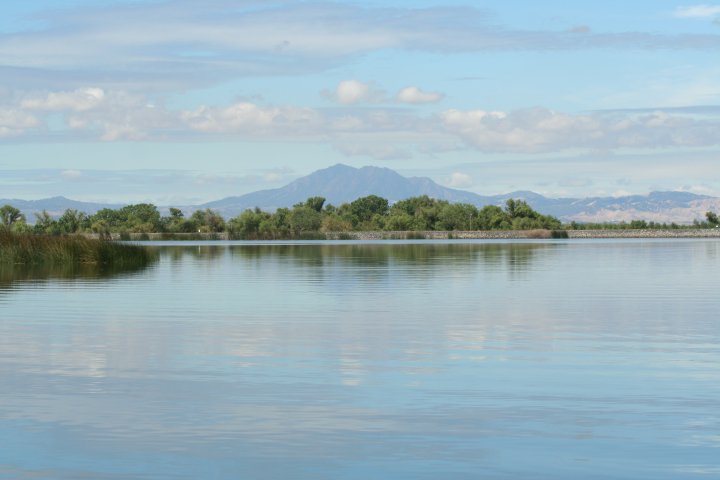
Paddle to the Sea makes it's way towards the bay through the Sacramento-San Joaquin Delta - the largest estuary in the west of North and South America. The Delta is a critical ecosystem for many species, including the salmon who travel through it on their way to and from the Tuolumne River (and other rivers). It is also the center of much controversy in California water supply and politics.


Tuesday, May 25, 2010

Mining the flood plain for gravel

nesting Gray Herons in Cottonwood


Another Cottonwood just downriver, no longer a good nesting spot.

old growth Valley Oak above river

Strangers in our own home

"Inability to accept the mystic experience is more than an intellectual handicap, lack of awareness of the basic unity of organism and environment is a serious and dangerous hallucination.—Alan Watts"


By now you have probably seen James Cameron's film Avatar. If not, you might be so sick of hearing about it that you plan to boycott it on principle. Either way you are aware of the enormously popular film and its basic premise: the sacred interconnectedness of all living beings. Here's a rhetorical question: when was the last time this topic was covered on the evening news?

This thought haunted me today as we paddled the Tuolumne River through West Modesto. Why does it take computer-generated imagery at a cost of over 200 million federal reserve notes to peak our interest in our connection to nature? More importantly, why have we banished this topic to the realm of fantasy? This is a frightening situation, and it goes a long way toward explaining our complacency in the face of massive desecration of the natural world.

The Tuolumne River makes its rounds in the news, but it typically does so in the form of a commodity. Just as forests are measured by the number of board feet that they can render, the T tends to be--with startling ease--reduced to quantitative assessments of its worth as a source of irrigation water and hydroelectricity. To commodify this river system in such a fashion is to completely ignore the interests of the nonhuman stakeholders in its functioning. Perhaps that sentence looked a little bit strange, and I confess that I initially balked at the word choice. NONHUMAN STAKEHOLDERS? They do indeed exist, and though they cannot speak English or wear a tie to a board meeting, they have every bit as much of a right to live in this watershed as we do. And though we tend to ignore it on a day to day basis, it is a fact that our fate is intertwined with the fate of our fellow residents.

Here in the Tuolumne River watershed, and all over the planet for that matter, we are in dire need of a re-inhabitation of the land. At the moment, our society is engaged in an alien occupation of its natural environs; we are truly strangers in our own home. The idea that this process can continue unabated is dangerous and delusional. We must engage the topic of our vital spiritual connection to nature in a serious fashion, rather than deride the notion or interact with it solely on the level of entertainment.

Monday, May 24, 2010

Canoeing Video

Some video of our canoeing legs:

Sunday, May 23, 2010

Belated Upper T Video

By now we have worked our way down through Modesto. It truly feels like we have left the foothills and entered the central valley. The coast range is visible on a horizon swept clear by cold north winds.
The first leg of the journey, way back up on the wild and scenic, whitewater section of the Tuolumne, seems long ago in time, far behind in space. But in the spirit of remembering where we've been, as well as the idea that a belated token is better than none at all, I present a delayed visual reminder of our whitewater experience on the T:

Wednesday, May 19, 2010

La Grange to Turlock State Recreation Area (leg 3)

As soon as we arrived a put-in, I ventured out onto the rusty Old La Grange bridge, now unfit for cars, serving as a pedestrian crossing only, and peered down into the clear, clean water below. This was it - the Tuolumne below Don Pedro - and I was surprised to see what looked like a healthy flow and vibrant riparian corridor. Swallows circled below the bridge, returning briefly to their nests plastered under the bridge's steel girders, to feed their young who prepared for flight inside their mud houses. With the water clear enough to see the river's gravel beds, I imagined them thick with the thrashing tails of salmon, which numbered once in the hundreds of thousands but who's count in recent years has resembled something more like an 80-year high school reunion.

Shortly, our guests for the day arrived at which point we carried our five boats to the water's edge and pushed off into the green water. These first 8 miles was without a doubt the most challenging class 1 section of river I have ever boated. The gradient was never steep enough the warrant the term white-water, yet the high flows created a very pushy feeling and due to years of "fish-flow" releases from Don Pedro, vegetation had completely crowded the banks forming one continuous strainer lining both sides of the river. Every few hundred yards there was another island which also hosted overgrown vegetation, often with a broken branch or two dangling in the river and bending wherever the current would direct it. This was not a place you wanted to swim; the goal was to stay away from the banks and navigate through the maze of islands. At one point the river was so constricted with vegetation that the guides had to make an S-turn which required a brief upstream velocity to avoid being swallowed by a heinous strainer.

Soon enough we floated into calmer stretches and folks began to relax into the day. A Golden Eagle soared downstream and many other birds crossed the skies calling to each other as they enjoyed the clear blue skies.

Tuesday, May 18, 2010

Don Pedro Passage

Just four days after being towed into Moccasin Marina at the end of our rafting trip, I found myself getting ready again to put back onto the river. The contrast between these two days couldn't have been greater. Instead of stormy weather, the sky was clear, the wind light, and the temperature comfortably warm. Replacing my drysuit and layers of fleece were swim shorts, t-shirt, and hat, reflecting the danger of sunburn rather than hypothermia. A few miles upstream the rushing, chilly rapids of the Tuolumne were subsumed beneath Don Pedro's warm stagnate water, so I carried a fourteen-foot stand up paddleboard rather than a whitewater raft.
I had left Sausalito at dawn that morning and spent most of the drive worrying about whether attempting a 20-odd mile trip was really the best idea. I had been warned about the distance, nasty headwinds, and being run down by powerboats. But all those worries were washed away with the first paddle strokes, and except for sore muscles the rest of the six-hour paddle was quite enjoyable.
Notable experiences along the way include several osprey sightings, abundant wildflowers, a floating toilet (named the "S/S Relief"), and swimming in the reservoir's warm, clear water.
Peering over the edge of Don Pedro Dam at the end of the day I was surprised to see a steep-walled canyon at the bottom. After spending all day on the open lake, I had almost forgotten that I was paddling a flooded river canyon. Before the construction of the Old Don Pedro Dam 87 years ago, I would have been suspended above a river comparable to the wild and scenic section upriver with spawning salmon and exciting rapids. While we gained to ability to irrigate several hundred square miles of central valley farmland when Don Pedro Dam was built, it is good to remember what was lost when the Tuolumne was dammed.
I owe my thanks to George Phiripes at Surftech for loaning me a paddleboard for the trip as well as to the Tuolumne Trust's Patrick Koepele for generously picking me up after I botched my shuttle for this leg.

Tuesday, May 11, 2010

Leg 1 (Meral's Pool to Moccasin Marina)


Mention whitewater rafting and most people will recall memories of a hot summer day, plenty of water-fighting, maybe even jumping out of the boat to cool-off or float on their backs down the tongue of a "swimmer's rapid". The sixteen people who joined me on this trip will now have an alternate experience to remember: gray, overcast skies intermittently unleashing sheets of rain while paddling down a surging torrent of whitewater that at no point would be anything less than terrifying should one find himself unexpectedly out of the boat (as a few of us did).
I found there is something calming about rafting in the rain. I was no longer predicting when the next wave would break on the bow and douse my passengers, because they were already as wet as they would ever get. Fully surrounded by water, I couldn't help but embrace the fact that I had no chance of winning the game I sometimes play on sunnier days to take the dry route through the rapids. In fact I found myself actively seeking out the lines that would send the most bow-cresting waves into my paddler's faces.